
How to Get Court Records
Court level comes first. Valley County Court keeps traffic, misdemeanor, probate, small claims, and municipal-ordinance files. Valley District Court, the local Nebraska District Court, keeps felony, major civil, and domestic-relations matters. One combined clerk office in Ord serves both. When you write or call, give the case number, a party or caption name, the filing year if you know it, and the exact item you need, whether that is a Register of Actions entry, an order, a judgment, or a pleading.
For an online docket search, start with Nebraska Judicial Branch case information. JUSTICE can display case summaries, parties, ROA entries, financial information, and electronic images where they exist. It is not a Valley-built viewer. An older paper file, a missing image, or a certified record still goes through the clerk, who can also answer whether a record is public.
- Identify Valley County Court or Valley District Court and gather the case number, party or caption, and the record type.
- Search JUSTICE by party or case number, then inspect the Register of Actions and any image link attached to the needed entry.
- Use the statewide public-terminal route for courthouse inspection when remote access is not enough; the exact Valley terminal location should be confirmed with the clerk.
- Call the clerk at 308-728-3831 for a missing, unclear, older, or restricted record, or visit the counter at 125 South 15th Street in Ord.
- For a non-online record, mail or deliver a written Nebraska Public Records Act request that names the court, case, document, date range, delivery preference, and plain or certified choice.
- Ask for a cost estimate and whether the clerk prefers pickup or mailing before an extensive search or copy request.
Note: The clerk posts no dedicated copy-request form, email route, fax workflow, or turnaround promise for ordinary record requests. Plan on a written request or a call instead.
Valley County Court Record Layers
People say "court record" when they mean three different things. The Register of Actions, or ROA, is the case spine in date order. It shows what happened and when. A filed document is the paper itself. It may be a petition, motion, summons, order, judgment, or exhibit tied to one of those events. A certified copy is a permitted copy that the clerk authenticates for official use. Each layer has its job. The ROA finds the event. The filed document supplies the underlying paper when it is public, and certification serves a filing or proof need.
| Layer | What it shows | Usual route |
|---|---|---|
| Register of Actions | Chronological filings, settings, orders, and disposition entries. | JUSTICE case detail, public terminal, or clerk. |
| Filed document | The paper or electronic image behind a listed event. | Available JUSTICE image or clerk file. |
| Certified copy | A permitted copy bearing the clerk's certification or seal. | Valley clerk request and applicable fees. |
A search result list is not the whole case file. The district-court records rule counts the ROA, trial docket, judge docket notes, financial record, indexes, and case file as the record. What the clerk shows the public can be narrower than what the clerk keeps.
Types of Court Records
What a Valley County record contains depends on the court and the case. County Court files can involve traffic and misdemeanors. They also cover civil cases, small claims, probate, guardianship, adoption, protection orders, or municipal ordinances. District Court files run to felony, major civil, domestic-relations, district protection-order, and appellate matters. Once you supply enough case detail, the clerk can help. It can point to whichever office holds the record.
- Registers of Actions, trial-docket entries, and case indexes.
- Pleadings, complaints, petitions, answers, motions, and summons returns.
- Orders, decrees, judgments, and related certification requests.
- Public electronic images and older paper or microfilm case materials.
- Hearing transcripts or digital audio requested through their separate court process.
Valley County Court Record Requests
Valley publishes no standard copy form, so a clear written request does the work. It saves the clerk from guessing. Include your name and contact details, and name Valley County Court or Valley District Court. Give the case number or a party and year, describe the ROA or document sought, and list the date range. Choose paper or PDF with pickup or mail. Say whether you want certification. Ask about any deposit or postage before work starts.
The Nebraska Public Records Act §84-712 lets you examine records and take notes during office hours. It also sets a written-request path for copies. As practicable, and no later than four business days, the public body must act. It must grant access, deny with an explanation, or send a good-faith estimate. Residents get the first eight hours of search, redaction, or copying time without charge. The statute does not open a record that another law or court order makes confidential.
What a Court Record Contains
A public Valley case record opens with identification and court context. From there it shows the parties and the event history. Displays vary by case and access method. The official public information model covers case summary data, parties, offense information where relevant, financial information, ROA entries, judge notes, and any electronic images. Witness details are not public search fields. Protected personal data is not public either.
| Case identification | Court, county, case type, filing year, sequence, caption, subtype, and status when public. |
|---|---|
| Register of Actions | Chronological filing and event dates, notices, hearings, motions, orders, judgments, and disposition. |
| Parties and counsel | Procedural party names, roles, and attorneys when the public record supplies them. |
| Financial record | Receipts, disbursements, costs, payments, fines, restitution, or balances where shown. |
| Images and file | Electronic image links when available, or paper and microfilm materials held through the clerk. |
Valley County Court Record Images
Many filings after April 16, 2008 appear in JUSTICE as electronic images. The link is never guaranteed, though. A screen image is also not a certified copy. Valley records in the system reach back to March 2000 for district files and May 2000 for county criminal and traffic, probate and adoption, civil and small claims, and juvenile records. Those backlist dates describe system coverage only. They do not promise that every old paper was scanned, and an earlier case did not vanish if it predates the system.
The official sealed-record copy instructions lay out a separate DC 1:12 route for the subject of a sealed record.
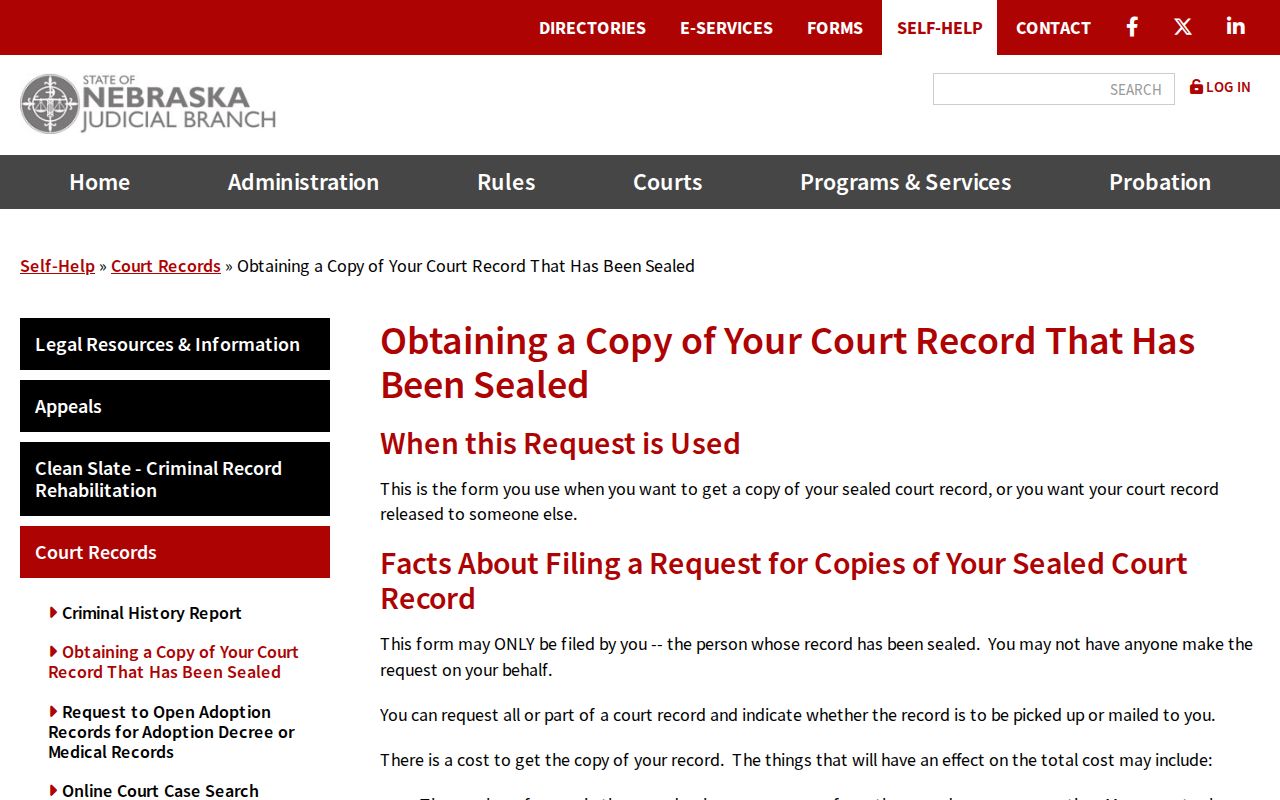
That sealed-record route is not an ordinary public document request. The clerk must work through permitted copies, certification, mailing, and any deposit with the requester directly.
Certified Copies and Fees
A plain copy works fine for reading or reference. A certified copy is different. The clerk authenticates it for a court, agency, or other official proceeding. Ask first whether the ROA, judgment, order, or filed document can be certified. Under §33-126.05, a county-clerk copy costs $0.25 per page. The certification or seal adds $1. The local exemplification and manual-search fees are not posted, so confirm both with the clerk.
| Record service | Current amount | Practical limit |
|---|---|---|
| Plain county-clerk copy | $0.25 per page | Statewide amount under §33-126.05. |
| Certification or seal | $1 added | Ask if the particular record may be certified. |
| County digital audio | $10 first CD-fit hearing; $5 additional hearing or CD | Estimate and prepayment apply; restricted hearings are excluded. |
| JUSTICE one-time search | $17 on the live page | Up to 30 results and a no-results charge; older FAQ text differs. |
Valley Clerk and Court Clerk Office
Lisa Bower is listed as County Court Clerk and District Court Clerk.
125 South 15th Street
Ord, NE 68862
308-728-3831
Valley County Court Record Transcripts
A Register of Actions tracks the procedural steps of a Valley County case. It is not a word-for-word transcript of what anyone said. For a typed transcript, Nebraska county-court practice calls for an estimate and payment up front. Anyone can request the digital audio of most hearings. Restricted hearings stay off limits, and the audio is not the official court record. Transcript rates come from the court reporter fee schedule. So confirm the current estimate and reporter availability with the Valley County clerk.
Nebraska's official county transcript and digital-recording instructions walk through both request paths separately.
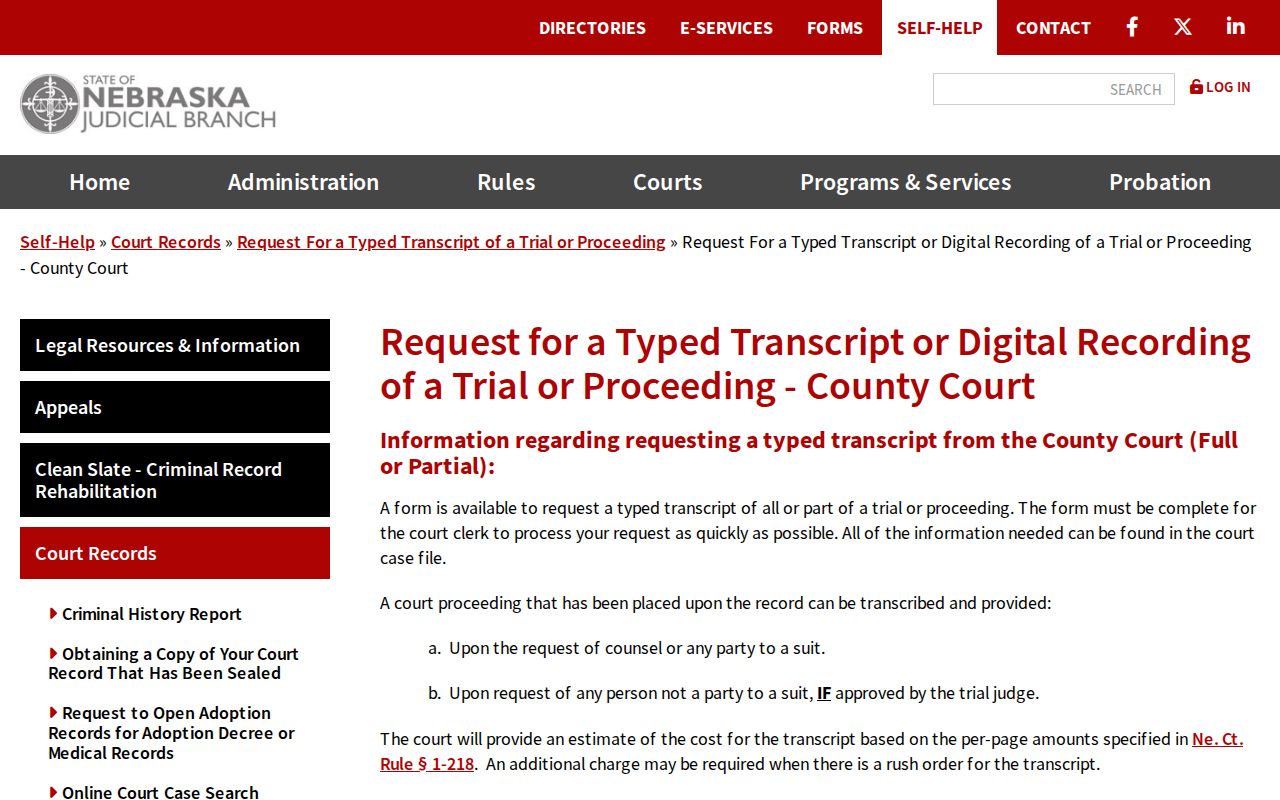
The line matters. Spoken testimony or a hearing recording sits on a different shelf than a filing or judgment in the case file.
Valley County Court Record Costs
Plain copies run $0.25 per page, and certification adds $1. Those two figures settle the basic question. But they do not price every court records request. Mailing, a large docket search, a transcript estimate, a sealed-record request, and an exemplified copy can each carry conditions. Valley does not publish those conditions in advance. So make the request specific. Name the document, the format, any certification, the delivery method, and ask for a cost estimate up front. That gives the clerk what she needs. She can route the request correctly instead of treating every file as a routine photocopy job.
Public Access and Sealed Records
Public access has limits. Not every item is remote, free, or open to every requester. Article 8 does give the public electronic access to party indexes, case summaries, ROA entries, available images, calendars, and judgment or order summaries. It also holds back anything a statute or court order makes nonpublic. When a case or image is missing from a docket search, the cause could be a 24-hour data lag or an older file no one has scanned. Juvenile confidentiality, adoption confidentiality, or a seal can hide a record too.
Key Rules:
Nebraska Article 8 makes the same public electronic information available through remote and public-terminal methods while preserving exclusions.
Rule §2-215 permits public inspection through a clerk terminal or State Library, subject to confidential and sealed exceptions.
Nebraska Public Records Act §84-712 supplies the inspection, copy, written-request, estimate, and response framework for public records.
Note: A certified copy authenticates a permitted record. Certification never overrides a seal or confidentiality rule.
Valley County Court Record Seals
Nebraska law keeps juvenile records and identifying information confidential. Adult records can be sealed through the applicable procedure. Valley County has no separate juvenile court, but that does not turn juvenile matters into ordinary public County Court docket results. Someone who qualifies for a copy of a sealed record should use the authorized DC 1:12 process and contact the clerk directly. A general public-records request is not a workaround for that restriction, and treating it as one will not get past the clerk.
Valley County Court Record Boundaries
JUSTICE belongs to the Nebraska state-court system. That means it holds no federal District of Nebraska file and no bankruptcy case. Federal matters tied to Valley County run through PACER and CM/ECF instead. The federal public terminals sit in Lincoln and Omaha, not in the Valley County Courthouse. The U.S. Bankruptcy Court for the District of Nebraska page is the official one. It reflects that separate federal channel.
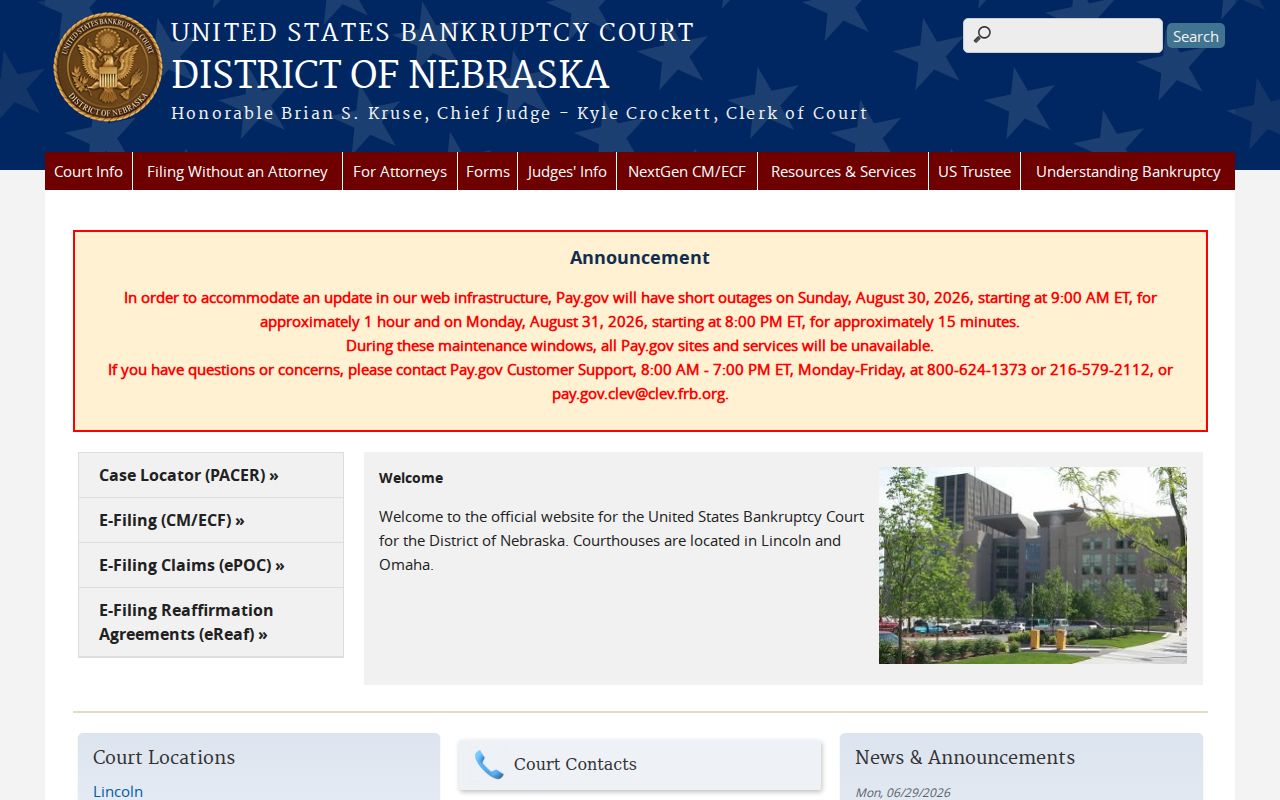
Bankruptcy records live in PACER and NextGen CM/ECF, never in the Valley clerk's Register of Actions. The CourtListener/RECAP source shows a free federal display, though coverage runs uneven.
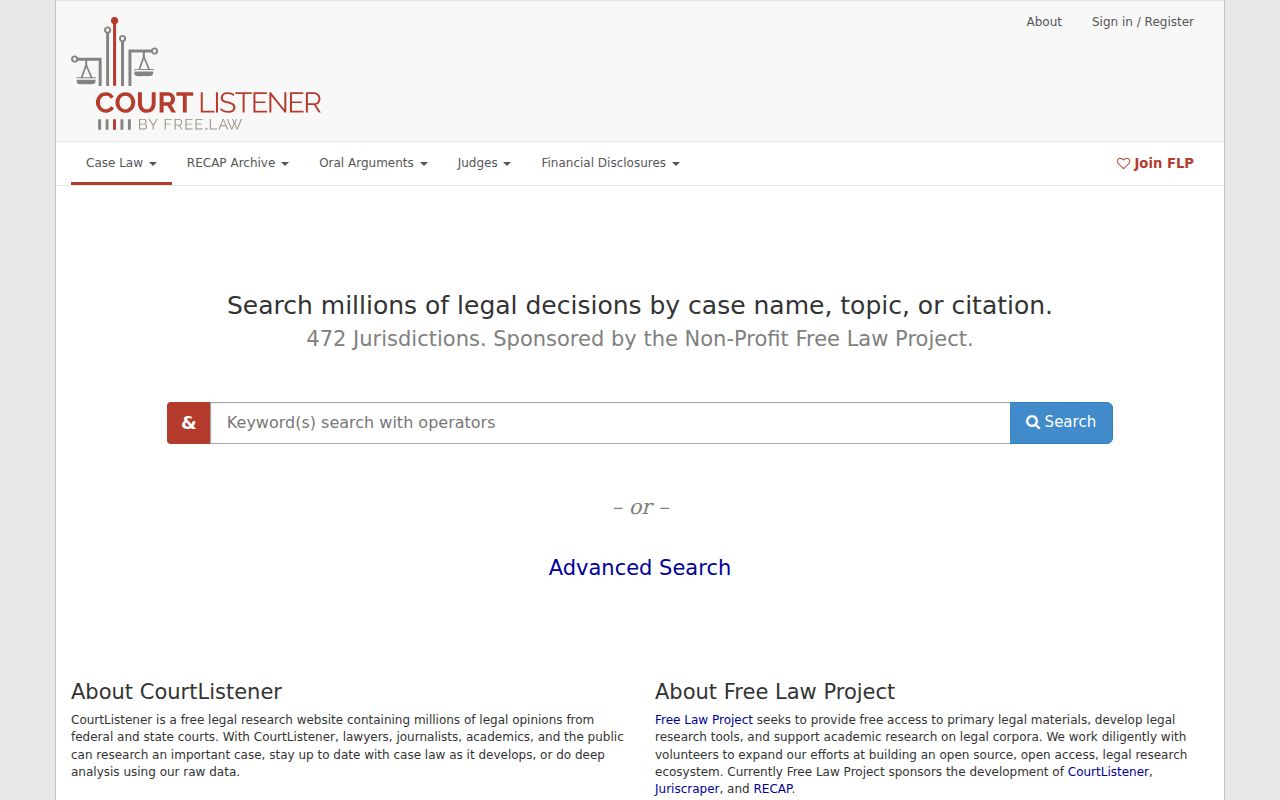
For an official federal record, PACER or the federal clerk is still the authoritative route. Neither image changes how the Valley state-court docket process works.
Valley County Court Record Archives
Older does not mean unavailable. Nebraska's district-court retention schedule treats the ROA and docket book as permanent, and it accepts paper, microfilm, and electronic case-file formats alike. When a JUSTICE docket search returns no image, ask the Valley County clerk which holding fits: the permanent index, the docket book, a paper file, microfilm, or an electronic repository. A tight request works far better than assuming the web result is the whole archive. Give the court level, case number, and date range.